Maintain your roof. Manage your risk.
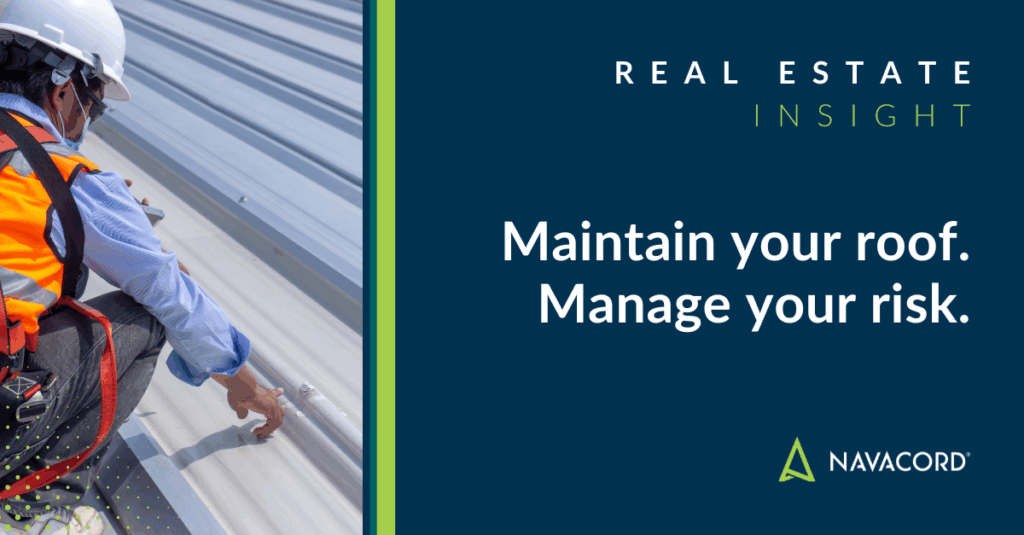
A building’s roof is not a set-it-and-forget-it asset. Like any part of a facility, it changes over time. Weather exposure, temperature swings and regular wear will eventually take their toll. Because most commercial insurance policies do not cover normal aging and deterioration, property owners and managers must take a proactive approach. A formal roof maintenance program, supported by regular inspections, is one of the most effective ways to manage both physical risk and financial exposure.
Catch small problems before they grow
Routine roof maintenance helps identify minor issues before they become costly repairs or lead to interior damage. While on-site maintenance staff should remain alert to visible concerns, comprehensive inspections should be conducted by qualified roofing professionals. In Canadian climates, inspections should take place at least twice a year, typically in the spring and fall, and after major weather events such as heavy snowfall, windstorms or hail. Roofs should also be assessed following nearby construction work that could affect the building envelope.
Inspections should review the condition of the roof covering or membrane, flashings, seams, drainage systems and penetrations. Any deficiencies should be addressed promptly. Allowing moisture to enter a roof system can significantly reduce its service life and may affect insulation, ceilings and walls inside the building.
Assessing damage requires experience and technical expertise. Professional roofing contractors can evaluate conditions accurately and recommend appropriate repairs. All repair work should be completed by bonded contractors who carry adequate commercial general liability insurance and workers’ compensation coverage in compliance with provincial or territorial requirements.
What a professional roof inspection includes
A thorough inspection provides valuable documentation and a baseline for future comparisons. It also helps property owners plan maintenance budgets and anticipate capital replacement.
General inspection
Inspectors should examine the underside of the roof deck where accessible, along with the exterior of the building. Cracks, stains, rust, watermarks, efflorescence, damp spots or deteriorating mortar can all signal moisture problems. These indicators may point to roofing issues or broader building envelope concerns.
The exterior roof surface should be checked for physical damage, structural deformation or signs of stress. Overhanging tree branches should be trimmed to prevent debris from accumulating and keep the roof surfaces wet. Eaves troughs and downspouts should be kept clear and functioning, and any debris should be removed promptly.
Sloped or pitched roofs
Sloped roofs are particularly vulnerable to wind damage if not properly maintained. Inspectors should look for granular loss on asphalt shingles, curled or deformed edges, missing shingles or roof tiles, and loose fasteners.
Proper attic or roof space ventilation is essential year-round. Adequate airflow prevents heat and moisture buildup that can lead to ice damming, shingle deterioration and reduced roof life. Louvers, ridge vents, roof vents and soffit vents should be kept unobstructed. All flashing and sealants should be examined for deterioration or failure.
Flat and low-slope roofs
Flat roofs are especially prone to water-related damage. Inspectors should look for punctures, blistering, cracking, surface wear or shrinkage patterns. Seams should be checked for open joints, ridging or adhesion failure. On mechanically fastened systems, loose or backing-out fasteners should be identified.
Ballasted roofing systems should be assessed to ensure the stone depth and weight meet design specifications. Areas of standing water should be noted, as ponding can signal drainage problems, settlement or structural movement. Flashings around drains, vents, parapets and expansion joints require close attention, as these are common failure points.
Detecting hidden moisture
A roof can appear sound while still hiding significant problems below the surface. Wet or saturated insulation compromises thermal performance and accelerates deterioration. To identify hidden moisture without damaging the roof, specialists often use non-destructive testing methods such as infrared thermographic surveys. These tools can help pinpoint problem areas early, reducing repair costs and preventing further damage.
Conclusion
Preventive maintenance is a key component of responsible property management. Engaging qualified professionals helps reduce risk, protect building assets and support insurance coverage should a claim arise. A well-documented maintenance program not only extends the life of a roof system but also provides peace of mind in an increasingly unpredictable climate.
This information is provided in good faith based on current understanding of industry practices in Canada. Property owners and managers remain responsible for complying with applicable legislation and insurance requirements.
To download the insight, click here.