Insuring Canada’s Energy Transition
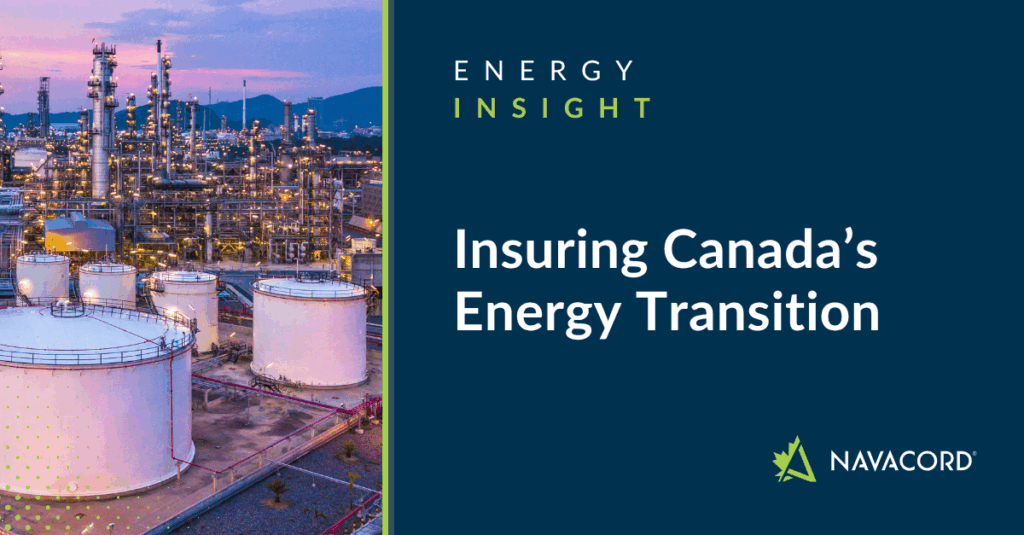
Canada’s energy transition is well underway. Carbon capture, utilization and storage (CCUS) projects are advancing from pilot to production, utilities are modernizing aging infrastructure, and operators are embedding sensors and analytics into daily operations. These investments are intended to reduce emissions, improve reliability and protect communities. They are also reshaping how risk is understood and insured.
At the same time, insurers and brokers are moving upstream. Traditional loss-based underwriting is giving way to predictive approaches that rely on real-time data, condition monitoring and forward-looking insights. The shift is from responding to claims after an event to helping clients prevent losses before they occur.
For energy organizations and their advisers, this evolution presents both opportunity and complexity. Understanding how predictive technologies and decarbonization projects affect insurance programs is now essential. This article outlines how Canada’s energy risk landscape is changing, why it matters for insurance, and where brokers can deliver meaningful value.
Predictive risk takes hold across Canada’s energy sector
Decarbonization is changing physical risk profiles.
CCUS facilities introduce new assets, construction phases and long-term operational risks. While often co-located with existing industrial sites, these projects rely on specialized equipment, compression systems and subsurface storage that differ from traditional upstream or power infrastructure. The result is a risk profile that is less familiar to many insurers and requires closer review.
Energy systems are becoming more data-driven.
Across the country, operators are investing in predictive maintenance and remote monitoring. In Alberta, upstream producers use specialized supervisor control and data acquisition systems with a human-machine interface to monitor pressure, flow, temperature, tank levels and key process measurements to detect early signs of failure and maintain optimal production. In Ontario, utilities apply analytics to predict transformer and switchgear degradation before outages occur. In British Columbia, wildfire modelling is increasingly tied into grid monitoring to support faster response and asset protection. These systems are used to improve real-time oversight, strengthen regulatory compliance and enhance cybersecurity across critical infrastructure.
Insurers are using this data to assess risk earlier.
Rather than relying solely on historical loss experience, underwriters are paying closer attention to how organizations monitor asset health, manage near misses and respond to emerging hazards. Predictive insights allow insurers to price risk more precisely and engage earlier on risk improvements.
Risk and insurance implications for energy organizations
Property and equipment coverage face closer scrutiny.
As assets become more complex and connected, age and replacement cost alone are no longer sufficient. Maintenance practices, sensor coverage and response protocols increasingly influence underwriting decisions. Improved monitoring does not automatically translate into better terms; insurers still look for evidence that controls are identified, maintained and monitored.
Construction and project risks require active alignment.
CCUS and low-carbon projects often involve new technologies, multiple contractors and extended timelines. Builders’ risk programs must address testing phases, staged commissioning, design changes, long-term containment and monitoring technologies. Coverage gaps can emerge quickly if project scopes evolve without corresponding insurance updates.
Cyber and operational risks are converging.
Connected energy assets expand exposure to cyber events that can trigger physical damage, environmental loss or service interruption. Many organizations underestimate how cyber exclusions or sublimits may apply to operational technology or physical outcomes.
Liability and governance exposures are evolving.
As decarbonization commitments become more visible and regulated, directors and officers face increased scrutiny. Disclosure practices, project performance and delivery timelines can all give rise to D&O exposures if expectations are not met.
How brokers add value
Translate operational data into underwriting insight.
Brokers can help clients clearly articulate how predictive maintenance programs are implemented and managed within an organization. Highlight how equipment data and analytics are used to identify early signs of failure, how systems are continuously monitored with automated process enhancements. How is downtime reduced through targeted monitoring? Operations and Management oversight and response. This insight highlights the risk management programs in place, reduces uncertainty and supports more informed underwriting.
Reassess coverage as projects evolve.
Energy transition projects rarely follow a straight path. Regular reviews are critical as construction progresses, equipment comes online, and operating assumptions change, particularly for builders’ risk, equipment breakdown and environmental coverage.
Bridge cyber and physical risk discussions.
Cyber insurance is often treated as an IT issue. Brokers can bring operations, engineering and risk teams into the conversation to ensure coverage reflects how cyber events could lead to property damage or liability losses.
Position risk improvement as a strategic asset.
Predictive tools do more than support insurance outcomes. They reduce downtime, strengthen compliance and improve safety. Brokers who frame these investments as business enablers reinforce their role as long-term advisers.
Conclusion
Canada’s energy transition is reshaping how risk is identified, measured and managed. CCUS projects, predictive analytics and digital infrastructure are creating more transparent and dynamic risk profiles. For insurers, this enables earlier engagement. For brokers, it creates a clear opportunity to lead.
The strongest broker–client relationships will move beyond annual renewals toward continuous risk dialogue. By aligning operational data, insurance coverage and decarbonization goals, brokers can help energy organizations protect capital, manage change and move forward with confidence in an evolving risk landscape.
To download the insight, click here.